

Banner image source: (1) Travel Pockets – YouTube
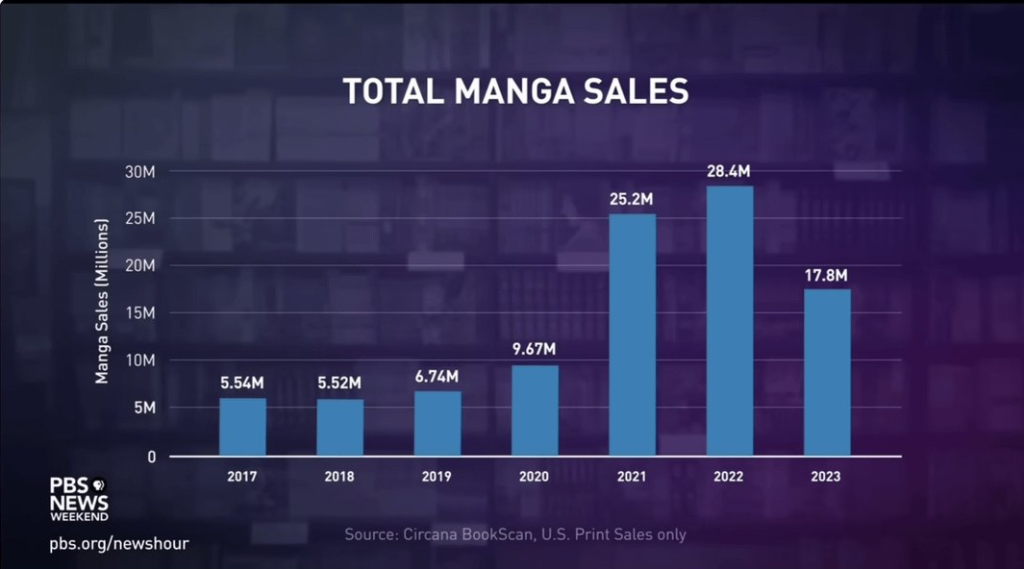
In 2001, manga generated roughly $1,000 in tracked U.S. graphic novel sales. By mid-2025, it accounted for 56.9% of the entire graphic novel market, generating over $24 million before the year even ended. This shift didn’t just happen overnight.
Over the past two decades, anime and manga have moved from Saturday morning Cartoon Network blocks and convention hotel ballrooms into the mainstream DNA of how sequential art is made, sold, consumed, and taught in America. The influence shows up in comic art styles, panel pacing, storytelling structure, classroom curricula, and a convention circuit which now rivals the superhero event scene it once shadowed.
The Next Generation of Comic Readers Have Already Decided
The question of whether anime belongs in American culture was settled quietly, somewhere between a Toonami broadcast and a Crunchyroll binge — not by critics or publishers or industry panels, but by readers themselves. Gen Z now holds the dominant share of the global manga market and is expected to maintain that position through the next decade. This is a generation that did not grow up making a distinction between “Japanese comics” and “American comics.” They grew up making a distinction between good stories and bad ones.
By the Numbers: Market Dominance
- 250%+— U.S. manga sales growth from 2019 to 2023 alone (NPD BookScan, 2023)
- 49%— Share of all U.S. graphic novels sold in 2023 that were manga (NielsenIQ)
- Top 10— All ten bestselling graphic novels of 2025 were manga; the first Western title appeared at #28 (NielsenIQ BookData)
- $10.2B → $43.8B— Global manga market value in 2025, projected to 2033 at 20.5% CAGR (Grand View Research)
- 56.9%— Manga’s share of all graphic novel subcategory sales in 2025
- $9–15— Typical Viz Media manga volume price vs. $15–25 for DC/Marvel collections — a critical gap for the 13–24 core readership
What Western Comics Absorbed
Visual Style— Large expressive eyes, speed lines, kinetic panel compositions, and exaggerated emotional expression have moved from manga into mainstream Western comic art across major and independent publishers alike.
Narrative Architecture— Manga normalized long-form, emotionally sustained storytelling where characters visibly change over time and stories have true endings. This contrasted sharply with the episodic, reset-heavy structure of American superhero publishing and reshaped reader expectations industry-wide.
Genre Diversity— Before manga, Western comics were superhero-dominant. Manga’s full ecosystem of romance, horror, sports drama, psychological thriller, and slice-of-life fiction directly contributed to the genre expansion seen at publishers like Image, Dark Horse, and Boom! Studios over the past 15 years.
The Adaptation Engine
When a manga gets an anime adaptation on a major streaming platform, source material sales spike reliably — a pipeline with no consistent Western equivalent.
Chainsaw Man Vol. 1 became the #1 bestselling manga of 2022 despite debuting in 2018 — because its anime aired that year. The same effect drove massive sales for Attack on Titan, Jujutsu Kaisen, and Demon Slayer. DC saw a version of this when Netflix’s Sandman adaptation pushed the 1989 Vol. 1 to $150,000+ in sales — but the manga pipeline is more consistent and deliberately engineered.
Crunchyroll, Funimation, Netflix, and Hulu have made anime globally accessible in ways that structurally advantage manga over Western comics for new reader acquisition. The exposure to anime in everyday life has drastically increased in America over the past decade – something renowned DC artist Stanley Lau aka. ArtGerm corroborated in our interview with him:
“Yes, I believe the expansion of Anime in the West is mainly due to streaming services like Netflix. Shows like “One Punch Man,” “My Hero Academia,” and others are released simultaneously worldwide, creating a global conversation. This has led to more Asian artists entering the comic world and expanded the taste of audiences. It’s a good thing, creating a more diverse and interesting comic industry.”

In American Schools
Anime clubs are now a standard feature of American high school extracurricular life — a fact that would have been difficult to predict even 15 years ago, when anime fandom was heavily stigmatized in school culture. This growing presence significantly increases readership among the next generation of comic book fans and integrates their cultural exposure to the medium as one of a blended style. These students are not choosing between two traditions — they are absorbing both simultaneously, and to them, there was never a difference to begin with.
From High Schools to Harvard:
What begins in high school club rooms has followed students up the educational ladder into universities and academic research. Institutions that once would never have considered anime a serious subject of study are now not only acknowledging it, but actively building curricula around it. The medium has earned its place not just as entertainment, but as a lens through which educators are examining culture, media, identity, and even science literacy.
- A 2025 peer-reviewed study in Frontiers in Education found anime’s popularity among 18–34 year-olds makes it an effective STEM outreach and educational engagement tool.
- High school clubs at Shepard HS (Palos Heights, IL), Hallsville HS (TX), and Great Mills HS (MD) host weekly screenings, cosplay events, Japanese culture nights, and mini convention-style gatherings.
- Harvard University now offers a General Education course: “Anime as Global Popular Culture” covering media ecology, production, distribution, and fan culture.
The Convention Circuit
| Year | Anime Expo Attendance | North American Anime Cons |
| 1983 | 100 (Yamatocon, Dallas) | ~1 |
| 2005 | ~40,000 | ~20 major cons |
| 2010 | 105,000 (turnstile) | 47 registered |
| 2017 | 107,658 | Growing |
| 2024 | 392,000 | 130+ registered |
| 2025 | 410,000 (record) | 130+ registered |
Anime Expo 2025 drew fans from 65+ countries, generated $110M+ economic impact for Los Angeles, and featured 1,300+ hours of programming (SPJA, July 2025).
Anime conventions represent 24.8% of the global fan convention market — the second-largest sub-segment after general comic cons (DataIntelo, 2025).
Cosplay — now a defining feature of all American fan conventions — arrived in the U.S. primarily through anime fandom in the 1990s.
The Hybrid Generation
The clearest sign that anime’s integration into Western comics is complete is not found in sales charts or convention attendance — it’s found in the work itself. A new generation of creators has emerged that doesn’t distinguish between Eastern and Western comics traditions, fluently borrowing from both to produce something neither culture could have made alone.
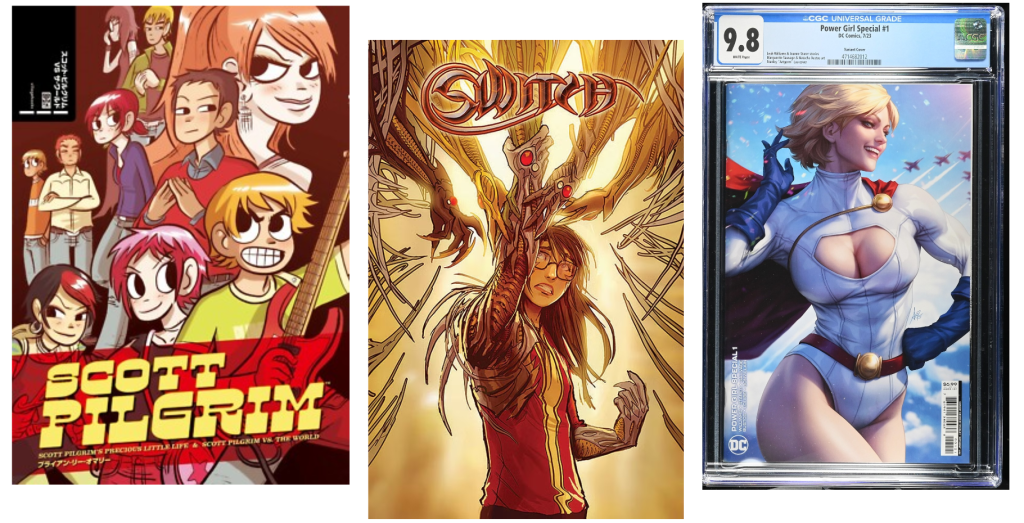
- OEL (“Original English Language”) manga — Western creators producing work in the manga format — has grown since Tokyopop pioneered the category in the early 2000s.
- Bryan Lee O’Malley’s Scott Pilgrim and artists like Stjepan Šejić (DC/Marvel), and Artgerm (DC/Marvel), explicitly blend manga pacing and aesthetics into Western mainstream work.
- Platforms like Webtoon have given OEL creators global distribution infrastructure.
- Japanese publishers are now treating New York Comic Con as a major licensing announcement venue — a reversal of the cultural direction from 20 years ago.
Bottom Line
The integration of anime into Western comics is no longer a trend to track — it’s a completed fact of the medium’s identity. An entire generation of readers and creators was shaped by a competing creative tradition offering longer stories, greater genre diversity, lower price points, and a robust adaptation pipeline.
What the numbers confirm, American high school anime clubs, university courses, and sold-out convention floors have already known for years: the border between Eastern and Western comics culture is not blurring. It has dissolved. The next generation of American readers, creators, and storytellers does not experience anime as a foreign import. They experience it as part of the air they breathe — as natural a piece of their creative inheritance as Superman, Peanuts, or Watchmen.
Sources: NPD BookScan · NielsenIQ BookData · Grand View Research · FanCons.com · SPJA (Anime Expo) · Frontiers in Education (2025) · Precedence Research · DataIntelo · AnimeCons.com
Source URLs
- The Influence of Manga and Anime on The Comics Industry — GobookMart https://gobookmart.com/the-influence-of-manga-and-anime-on-the-comics-industry/
- Comic Book Market Size and Share | Industry Report, 2033 — Grand View Research https://www.grandviewresearch.com/industry-analysis/comic-books-market-report
- Digital Comic Statistics and Facts (2025) — ElectroIQ https://electroiq.com/stats/digital-comic-statistics/
- The Cultural Shift: Manga’s Surprising Domination of Western Comic Sales — Hybrid Mag https://www.hybridmag.co.uk/p/the-cultural-shift-mangas-surprising
- The Rise of Manga in the West — Matt the Zainer https://matthezainer.com/2025/11/02/the-rise-of-manga-in-the-west/
- The Influence of Manga on Western Comics and Pop Culture — Toons Mag https://www.toonsmag.com/the-influence-of-manga-on-western-comics/
- The Influence of Manga on Western Comics: A Cross-Cultural Examination — The Comics Professor https://thecomicsprofessor.com/the-influence-of-manga-on-western-comics-a-cross-cultural-examination/
- Manga Market Size, Share & Trends | Industry Report, 2033 — Grand View Research https://www.grandviewresearch.com/industry-analysis/manga-market-report
- The Cultural Impact of Manga on Western Pop Culture — Peech https://getpeech.com/blog/the-cultural-impact-of-manga-on-western-pop-culture-insights-and-influences
- The Influence of Anime and Manga on Western Pop Culture — Rock & Art https://www.rockandart.org/influence-anime-and-manga-western-pop-culture/
- Thriving Anime Club Reflects Nationwide Trend — Amherst Student https://amherststudent.com/article/thriving-anime-club-reflects-nationwide-trend/
- The Power of Anime: Using Anime for Education and Outreach in STEM — Frontiers in Education https://www.frontiersin.org/journals/education/articles/10.3389/feduc.2025.1707055/full
- Anime Clubs: A Complete Guide — AdmissionSight https://admissionsight.com/anime-club/
- Anime Club Grows in Popularity, Mirroring National Trend — Penn State Scranton https://scranton.psu.edu/feature/anime-club-grows-popularity-mirroring-national-trend/
- Anime as Global Popular Culture (Course listing) — Harvard University EALC https://ealc.fas.harvard.edu/general-education-1042-anime-global-popular-culture
- Anime Expo Wikipedia Entry — Wikipedia https://en.wikipedia.org/wiki/Anime_Expo
- Anime Conventions 2025: Are They Still Growing or Fading? — Alibaba Business Insights https://www.alibaba.com/product-insights/anime-conventions-2025-are-they-still-growing-or-fading-in-popularity.html
- The Growth of Anime Events — LinkedIn / Dallas Middaugh https://www.linkedin.com/pulse/growth-anime-events-dallas-middaugh
- Largest Anime Conventions of 2005 — AnimeCons.com https://animecons.com/news/post/221/largest-anime-conventions-of-2005
- Fan Conventions Market Research Report 2034 — DataIntelo https://dataintelo.com/report/fan-conventions-market
- Anime Expo 2025 Sets Record with Over 410,000 Attendees — Final Weapon https://finalweapon.net/2025/07/15/anime-expo-2025-sets-record-attendance-with-over-410000-attendees/
- Anime Expo 2025 Official Wrap Report — Anime Expo / SPJA https://www.anime-expo.org/2025/07/14/anime-expo-2025-wraps-four-days-of-celebration-with-attendees-from-over-65-countries-1300-hours-of-programming-and-discussions-on-its-future/
- Conventions and Nostalgia — Answerman — Anime News Network https://www.animenewsnetwork.com/answerman/2025-11-10/.230842